
Hog farmer uses conservation to prepare land for next generation
By Micaela Cashman
In the gently rolling hills of northwest Plymouth County, Bob Puetz has spent a lifetime farming the land he calls home. The region, once dominated by tallgrass prairie, is rich with loam soil. But with erosion risk on slopes and naturally poor drainage in some areas, farming here requires vigilance and vision.
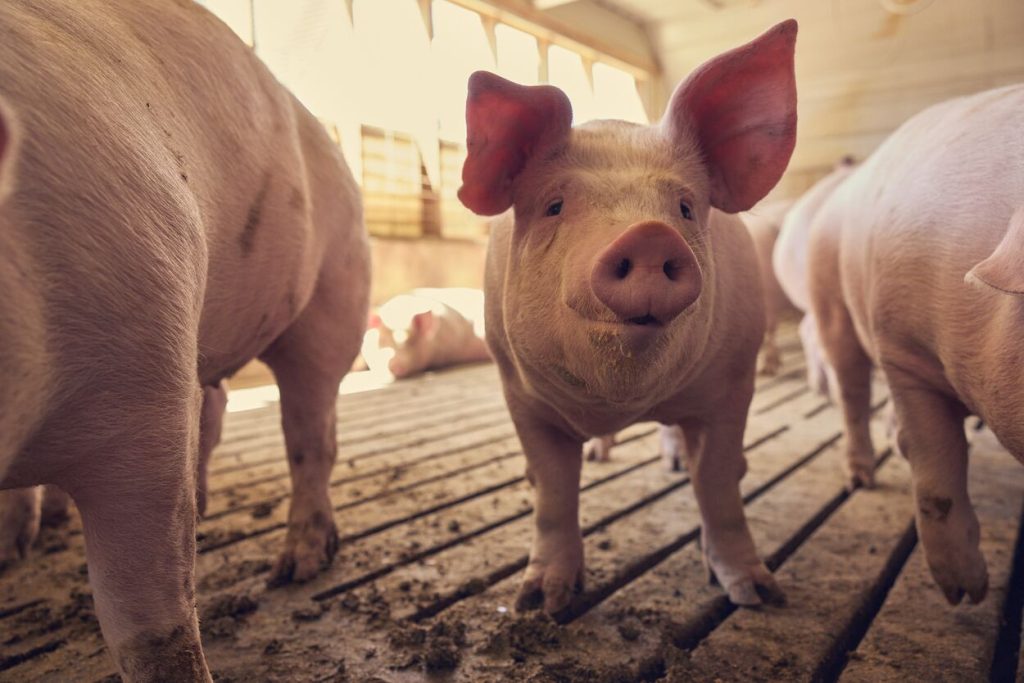
Puetz, 70, began working with his father on the farm at 15 years old. Today, Puetz farms 3,800 acres of row crops and raises 9,000 pigs in an area known for high hog populations.
Puetz credits his father for introducing him to no-till farming before it became widely adopted. They had used no-till for many years before Puetz came home convinced conventional tillage was the way forward after attending a winter farm operations course at Iowa State University. After about three years of trying conventional tillage, Puetz was proven wrong.
“We went back to no-till,” he said. “Dad was right.”
That experience marked the beginning of a deeper commitment to soil and water quality for Puetz. Over the years, he has implemented conservation practices tailored to his land’s rolling hills. Contour farming and terraces are two strategies that have paid off. By shaping the land to slow and direct runoff, these practices reduce erosion and protect topsoil.
“It gives us total control of water flow,” he said. “It’s been a game changer.”
Puetz has also adopted cover crops, planting winter wheat and beets just before soybean harvest or immediately after. He was one of the first in his area to experiment with cover crops, working closely with the local Natural Resources Conservation Service (NRCS) office to implement them successfully.
He has added Conservation Reserve Program (CRP) waterways seeded to switchgrass on three farms, as well as 30 acres of filter strips along Deep Creek to prevent runoff. These land-based practices help channel and protect water while providing wildlife habitat, which is a benefit to Puetz, an avid outdoorsman and pheasant hunter.
“It’s amazing what we see on our land now,” he said.
Puetz’s conservation efforts extend to his livestock operation. His hog facility uses an umbilical cord system to apply manure directly to his fields. The system allows nutrients to be applied efficiently and with minimal impact on neighbors and local roads.
“No one knows we’re putting it on because it doesn’t smell,” he said.
Puetz’s leadership in pork production has been widely recognized. A member of the Plymouth County Pork Producers Association, he has been named a Master Pork Producer by the Iowa Pork Producers Association. In 2021, he received the Wergin Good Farm Neighbor Award, honoring his commitment to environmental stewardship and community involvement.
“I was shocked to get any kind of award,” he said. “That’s not what I do it for, but it felt good to know people see what I’m doing.”
Puetz serves on the board for the Plymouth Soil and Water Conservation District, where he continues to advocate for practical, farmer-led conservation and learns from his fellow farmers on a daily basis. He has one piece of advice he offers to farmers looking to get into conservation.
“It takes a while to put a practice into effect and see returns,” he said. “If you’re going to try programs, be patient and stick with it.”
For Puetz, the motivation has always been clear: Protecting the land ensures its productivity for future generations, which is what his father did for him. Today, Puetz owns his farm operations 50/50 with his son, Cory, who will one day take over.
With decades of practical conservation, Bob Puetz is not only a successful farmer in Plymouth County, but a respected steward of northwest Iowa’s plains.