
Reduce Erosion
Erosion can take a heavy toll on Iowa’s farmland. When topsoil washes away, it reduces productivity in the field and carries nutrients and sediment into our rivers and streams. Protecting soil is protecting the future of your farmland, and there are practical steps farmers can take to keep more soil in place while improving long-term yields.
Farmers across the state are adopting sound erosion control practices that work hand-in-hand with modern farming. From planting cover crops that hold soil through the winter to shaping the land with terraces or waterways, these practices are designed to keep valuable topsoil where it belongs. They also help improve water quality, reduce flooding, and strengthen the resiliency of your farm. Local conservation agronomists and technical experts can help you decide which practices are the best fit for your ground and your goals.
By reducing erosion with conservation in mind, you can protect your soil and keep your farm productive for future generations.
Some of the best practices to reduce erosion on your farm include:

Cover Crops
Grasses, legumes, and forbs planted for seasonal vegetative cover to reduce erosion and improve soil health.

Grassed Waterway
Grassy or native vegetation adjacent to streams that traps sediment from surface runoff.

Terraces
An embankment, ridge, or ridge-and-channel built across a slope to slow water runoff, therefore reducing soil erosion and phosphorus loss.
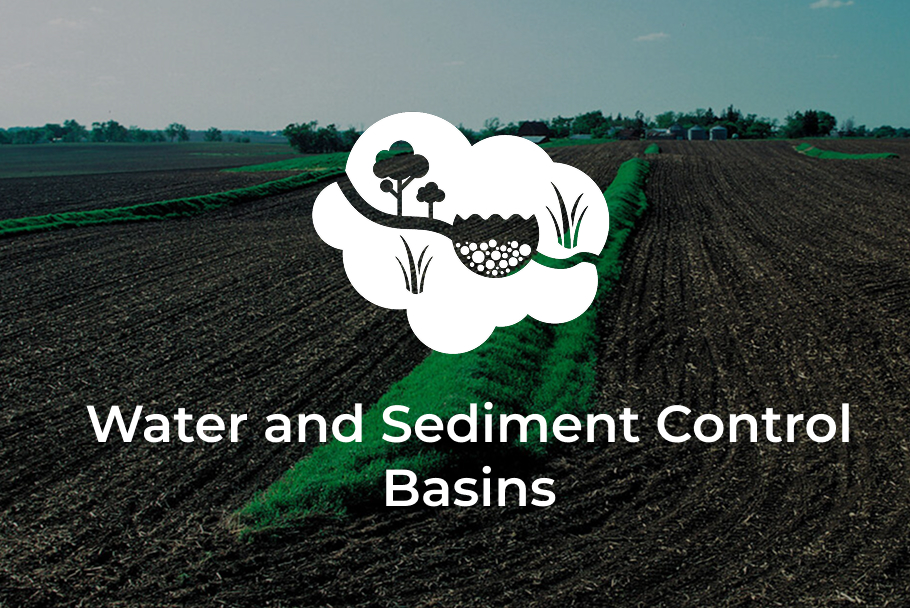
Water and Sediment Control Basins
Constructed at the end of a slope, an embankment collects water where gullies normally form during major rain events. This slows the water flow, allowing sediment to settle before draining through an outlet.