
Improve Drainage
Effective drainage is a large player in Iowa’s productive farmland. When we manage water, crops grow stronger, soils stay healthier, and more nutrients stay on our fields instead of in our water.
There are several proven practices that farmers are putting to work across the state, and getting started is easier than most people think. Cost-share programs and technical assistance are available to help cover installation expenses, and batch-and-build efforts make it possible to bring down costs by coordinating projects across multiple farms. Conservation agronomists and drainage contractors can walk you through which practices are the best fit for your land and your goals.
By improving drainage with conservation in mind, you can strengthen your operation today while protecting Iowa’s water for future generations.
Some of the best practices for to improve drainage on your farm include:
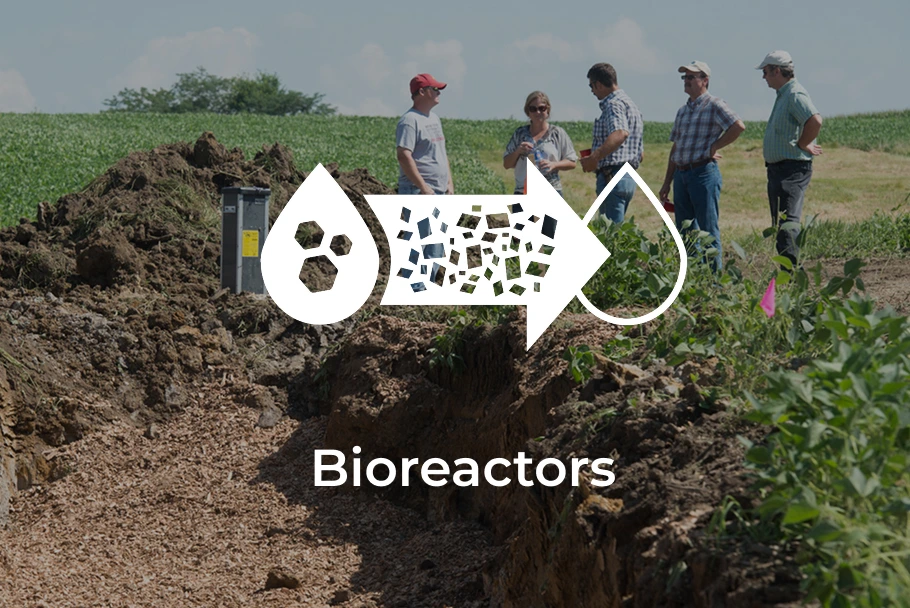
Bioreactors
Drainage water is diverted into a buried trench of woodchips where microbes break down nitrates in the water before releasing it. Like a Brita filter for a field – except it’s a biochemical process.
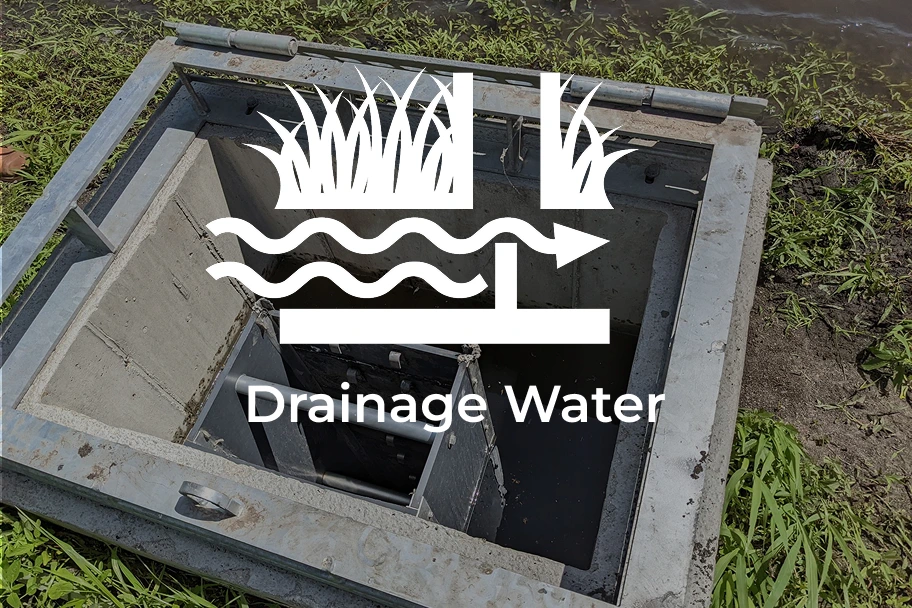
Drainage Water Management (Controlled Drainage)
Use of a water control structure to manage drainage of water from fields throughout the year. This practice can increase crop yields in some years.
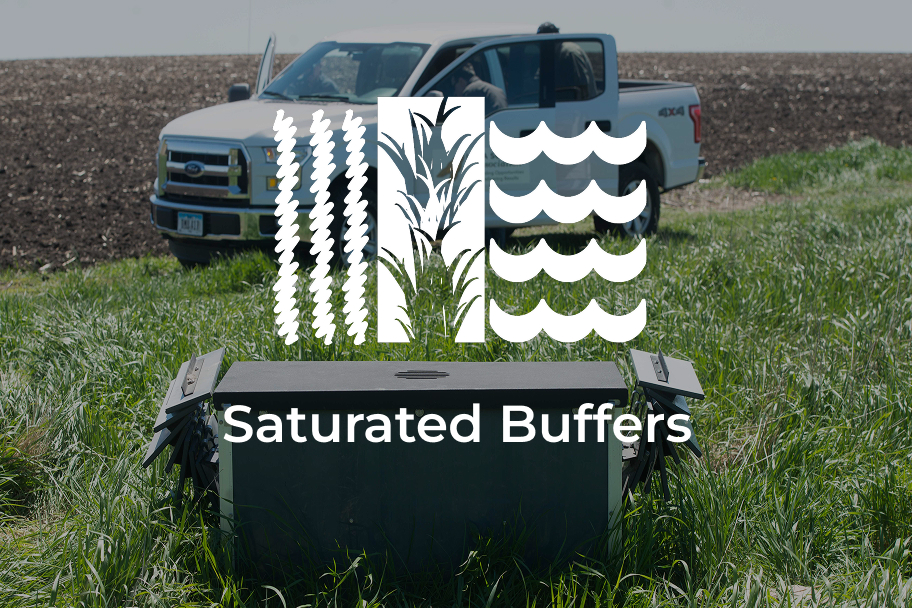
Saturated Buffers
Drainage water is diverted into an edge-of-field buffer by a control structure and distribution line. The line releases the water into the buffer soil where microbes break down the nitrate or it is taken up by the plants.