The Dead Zone
Iowa’s connection from 1,000+ miles away
What is the “Dead Zone”?
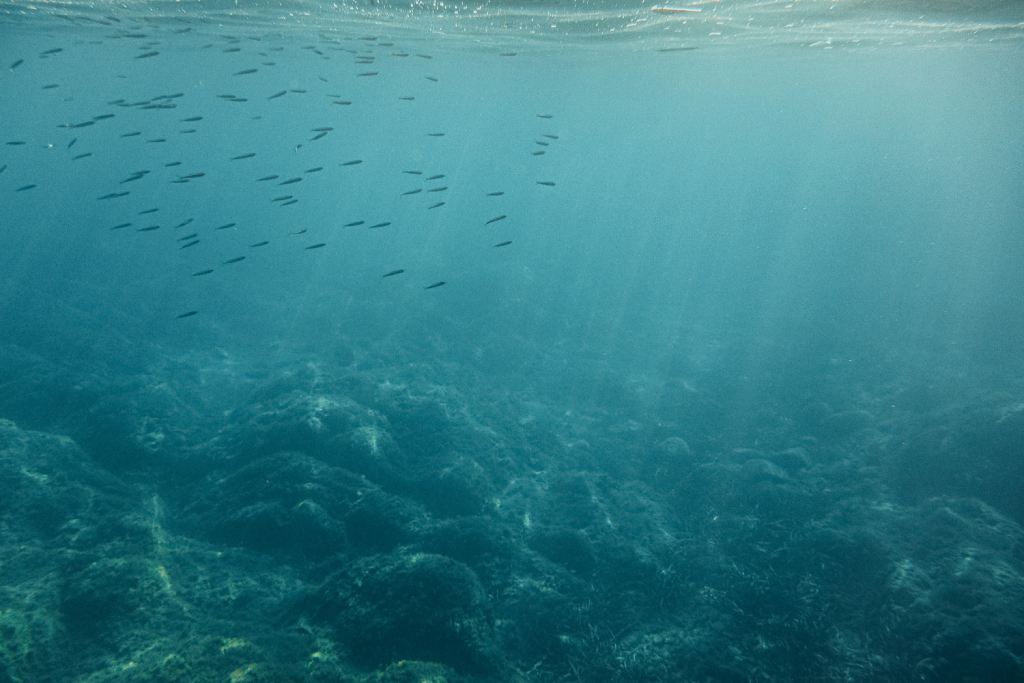
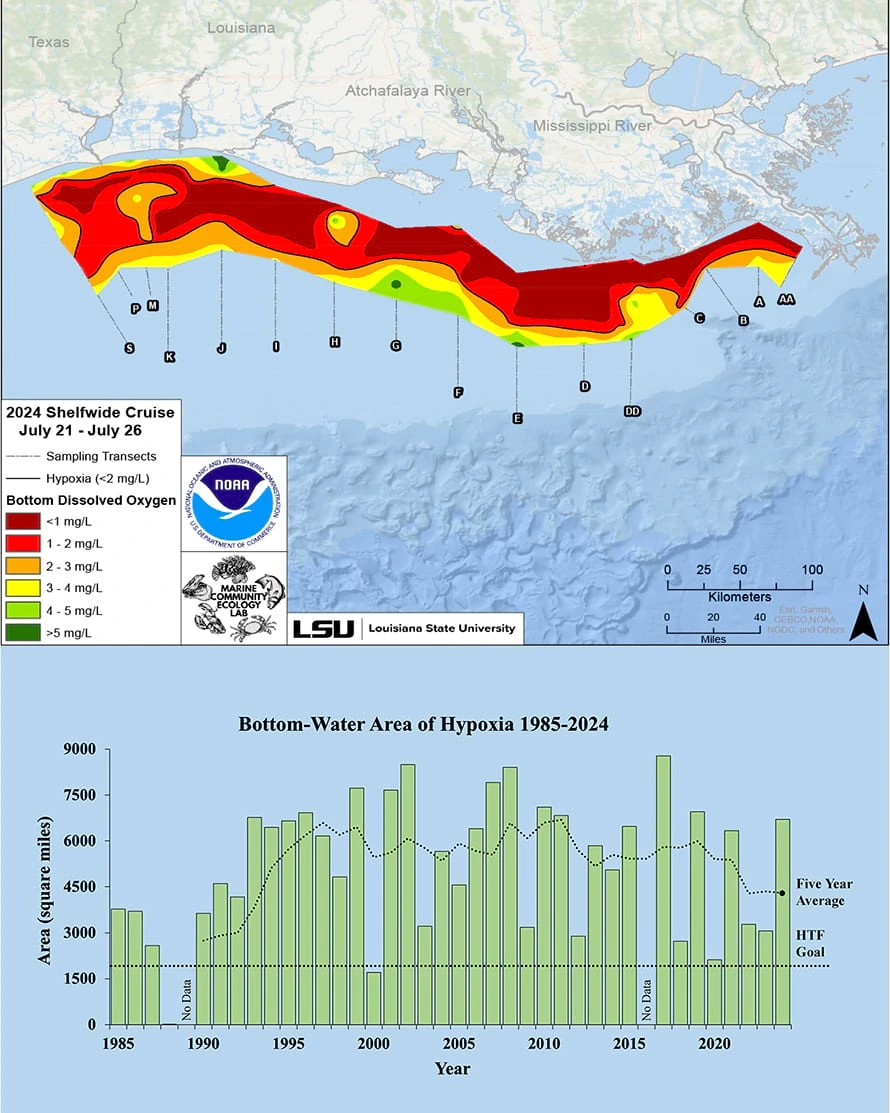
The Gulf of America (formerly Gulf of Mexico) Dead Zone is an area off the Louisiana and Texas coasts marked by very low water oxygen levels. It’s also called a hypoxic zone. It causes major environmental, economic, and health concerns in the region.
The Dead Zone starts where the Mississippi River ends. While such low-oxygen areas can appear naturally, there is strong, consistent evidence that high nutrient runoff from all of the Mississippi River Basin is a leading culprit behind the Gulf’s Dead Zone, per the Mississippi River/Gulf Hypoxia Task Force.
How does Iowa play a role in the Gulf’s Dead Zone? Click through the steps to learn more.
1. nUTRIENTS are used on iowa crops
Like us, crops need a nutritious diet to grow strong and healthy – Nitrogen and Phosphorus being key nutrients. They’re found naturally in rich soils, as well as in fertilizers applied by farmers, gardeners, landscapers, etc. Nutrients can also be found in wastewater, which is why it’s so important to have wastewater treatment for utilities.
2. nutrients move downstream
These nutrients can be carried off farm fields, golf courses, lawns, and other fertilized areas. They are then washed downstream along the Mississippi river down to the Gulf.
3. nutrients arrive in the gulf
Nutrients travel all the way to the Gulf, causing algae to bloom rapidly. When the algae dies, it depletes oxygen in the water, making it impossible for fish to survive in the Dead Zone.
4. nutrients fuel massive algae blooms
Algae are like any plants – they thrive when they have access to N and P.
5. Algae blocks sunlight
When there is so much algae in the water, it can block sunlight, starve underwater plants, and deplete oxygen when they die and decompose. This process is called eutrophication.
6. area becomes uninhabitable
The definition of a dead zone is that nothing can live there. Without oxygen, marine life cannot survive, impacting local fishing and the ecosystem.

What Iowans Are Doing to Fight the Dead Zone
While Iowa is not the only source of excess nitrogen flowing to the Gulf, everyone has a key role to play in improving water quality – for our own neighborhoods and those downstream. That’s why the Iowa Department of Natural Resources, Iowa Department of Agriculture and Land Stewardship, and Iowa State University introduced the Iowa Nutrient Reduction Strategy in 2013. Since then, Iowa farmers have stepped up their efforts to reduce nutrient runoff. We still have a long way to go, and we are making progress:

Cover Crops
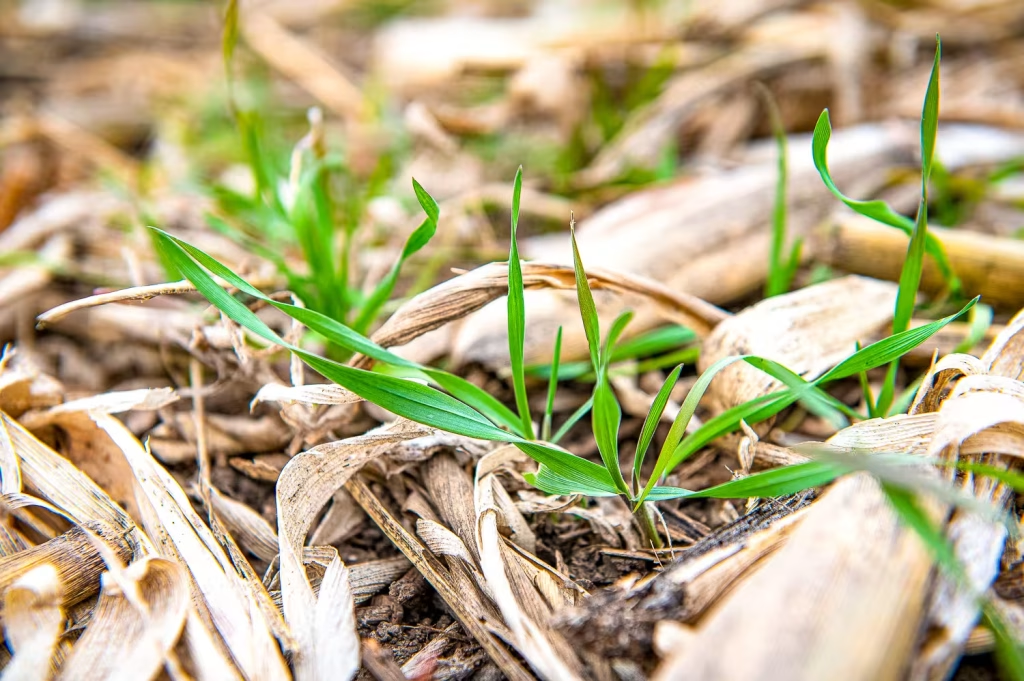
Iowa farmers seeded cover crops on nearly 4 million acres in 2023, according to the Iowa Nutrient Research and Education Council – more than double the acres planted in 2017.
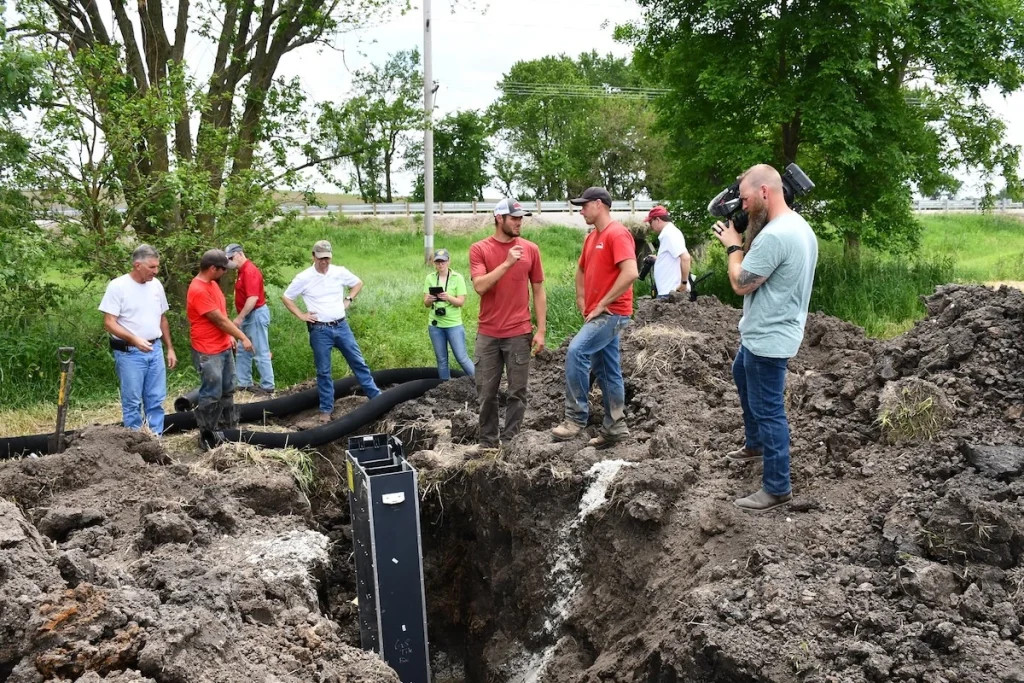

Edge-of-field Structures
The “Batch & Build” model of adding practices that slow down and clean water running off cropland, pioneered in Polk County, is spreading rapidly across Iowa.
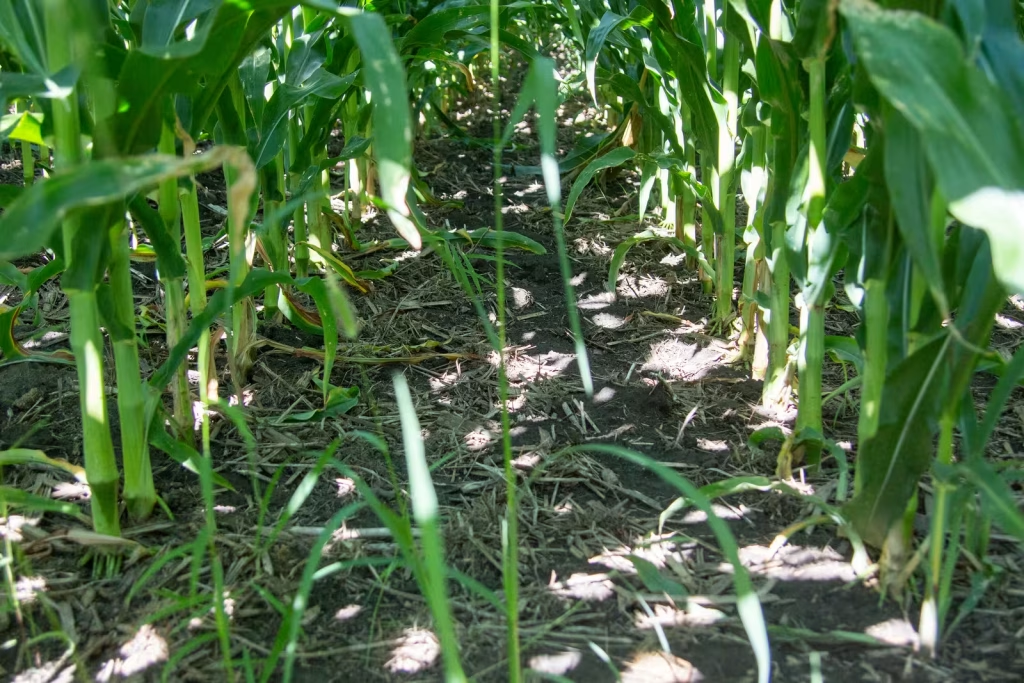

No-till & Strip Till
From 2017-2023, an average of 1-in-3 Iowa crop acres were not tilled – keeping the soil (and its nutrients) where it should be: in the field. Another 1/3rd of acres had conservation tillage – with significantly less soil tilled than in “conventional” practice.
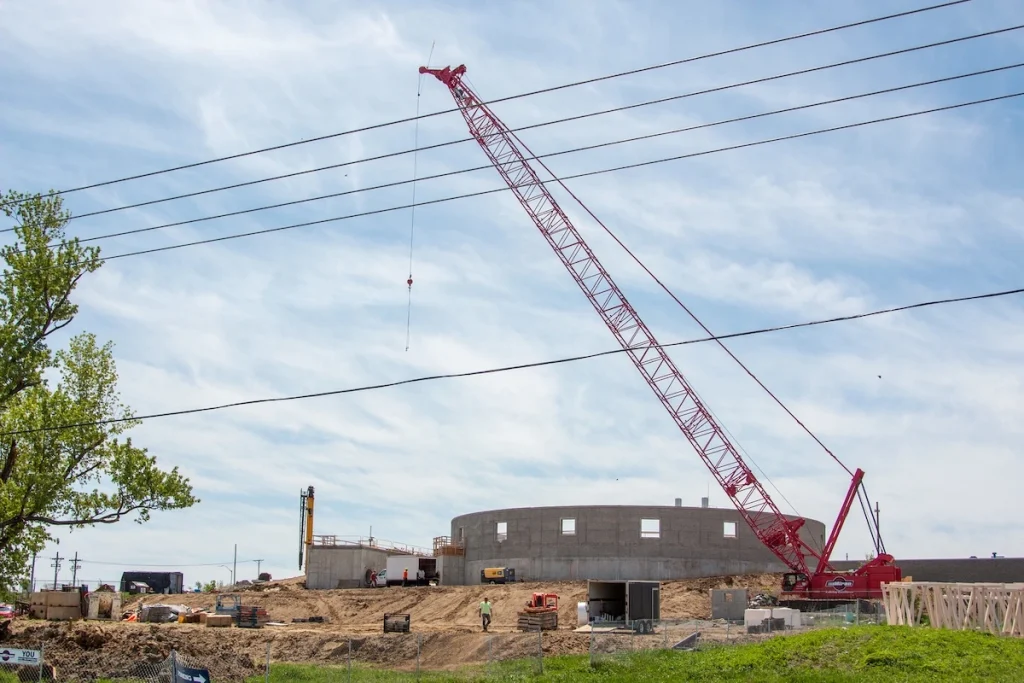

Urban Water Quality Efforts
Water quality isn’t just a “rural” issue. The Iowa NRS has goals for industrial and municipal wastewater treatment facilities, too – called point source facilities. As of 2021, 70 out of 157 facilities met reduction targets for N and/or P.
Partner Spotlight: Iowa Nutrient Research & Education Council
INREC has produced a set of videos explaining Iowa’s efforts to minimize and reverse our impacts on the Gulf Hypoxic Zone. In this 5-episode series, INREC explains:
- Why it all matters
- What the Iowa Nutrient Reduction Strategy is and why it was formed
- How they measure success
- How Iowa is implementing the strategy
- What education and outreach efforts are underway