
How one Eastern Iowa farmer makes conservation rewarding
By: Micaela Cashman
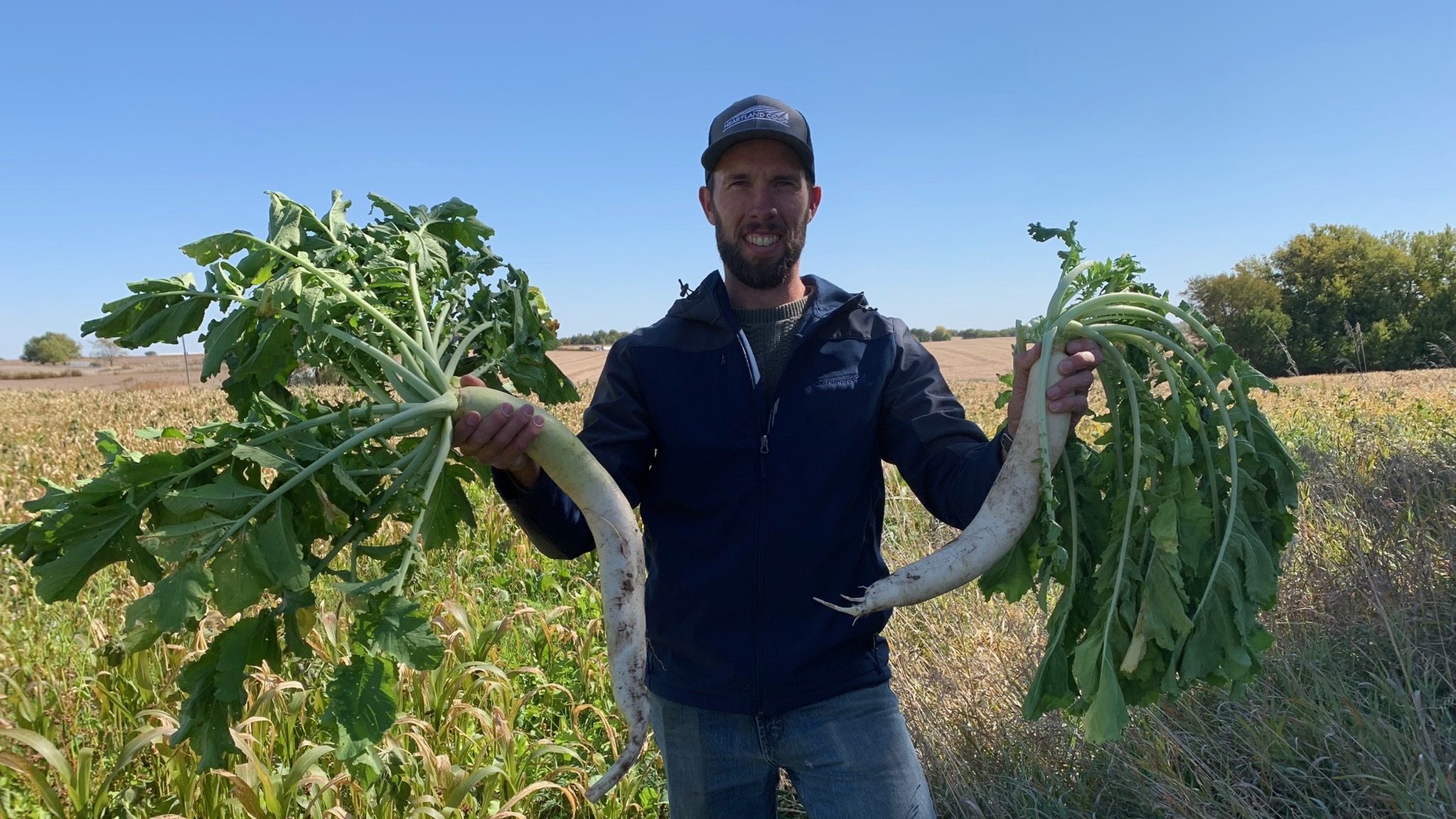
Emery Davis farms in Crawfordsville, Iowa, near the Iowa State Research Farm. His small family farm in the Southern Iowa Drift Plain was shaped by glaciers over 500,000 years ago and has been deeply eroded by streams, rolling hills, and valleys. Sloped land and thin topsoils make his fields highly vulnerable to sheet and gully erosion, which he said is his top daily concern.
“We’re constantly trying to keep nutrients and soil in the field instead of seeing it wash off,” he said.
That effort has turned into a career and a passion for Davis — and it’s made farming a lot more fun.
“Farming the way we were when I was growing up with tillage, corn, and soybeans and not trying anything new wasn’t interesting,” he said. “Now I have all these things I want to try out, and it’s rewarding to see less erosion and more wildlife.”
Davis said he has been interested in conservation since he was a kid, watching wildlife shows on TV, reading books, and hunting with his dad. But he didn’t realize he could make it a career until he started taking biology classes at Central College. His interest earned him degrees in biology and environmental science, and he now works as conservation agronomist and watershed coordinator at Heartland Co-op.

He started farming corn and soybeans with his dad on the side and quickly saw it as a way to try out some of the practices he’d been talking about with other farmers.
“I’ve brought conservation to the farm through trial and error,” Davis said. “Adopting a conservation mindset has been a big change on the farm, but we can definitely tell we’re losing less soil now.”
Their conservation efforts started with a shift to no-till and cover crops on all fields. Soil testing showed a steady rise in organic matter. Nutrient management also helped reduce runoff and kept the soil healthy. Their cover crop work soon led to what Davis calls his “favorite” practice.
“After the wheat, I grow red clover as a cover crop. When you harvest the wheat, red clover is underneath.”
While he could’ve used the red clover to make hay, he opted to keep it in the field and return the nutrients back to soil in organic form. That decision paid off.
“Our corn that year looked amazing,” he said. “It was dark green all year, it planted really well, had a really good stand, and it yielded 60 bushels better than our other fields.”
Davis continues doing small grain rotation of wheat and rye and has seen an improvement in soil health and a reduction in erosion.
“Diversifying keeps soil in the fields,” Davis explained. “Research shows wheat and rye in rotation over the course of three years leads to a yield bonus in the following corn and soybean crop.”
He said that while the wheat year isn’t overly profitable, the following corn and soybeans get enough yield boost to make it worthwhile. It also gives him the opportunity to get in the fields in the summer to fix waterways and install tile. By fall, the fields have good grass stands, providing space for Davis’s other passion: hunting.
Before he started working on the farm, the family wasn’t doing anything to care for wildlife and didn’t have any pheasants on their property. Davis joined a Conservation Reserve Program (CRP), and now they have pheasants in abundance.
“We farm, but while we’re out there, we’re keeping wildlife in mind,” he said. “If we build a better habitat, there’ll be more abundant wildlife.”
The family farm also provides standing grain and brush piles to create natural habitats for animals. The CRP and Conservation Stewardship Program (CSP) helped offset costs. Davis has taken advantage of several other cost-share programs, partnerships, and resources — including NRCS EQIP — across the state to implement his other conservation practices.
His advice for farmers looking to get into conservation? Take the first step with no-till.
“No till is great. You’re putting in less inputs, and you don’t need to have the time and machinery for tilling,” Davis said.
He added that planting rye ahead of soybeans is “a no-brainer” because soybeans are forgiving and can handle heavier cover crop planting. The rye will provide good weed control, which is especially important if you are growing non-GMO soybeans or wanting to use less chemicals in your fields.
“It’s almost like mulching the field with straw.”
Davis said he has more goals he’s working toward, including planting native prairie in less-productive spots and implementing cool season grasses. He added that he is always working on waterways.
“It’s a constant effort in making sure we don’t have erosive areas on our farm,” he said.
While it may be an effort, Davis still finds conservation fun and rewarding.
“It’s great to see the abundant wildlife in the fields,” he said. “Trying all these different things keeps the job interesting and exciting.”
