
Data centers aren’t new, but they’ve been getting an increasing amount of attention as tech companies work to meet the demands of an increasingly online society. In this article, IAWA breaks down the pros and cons of data center investments and corrects common misinformation.
By Dan Looker
Key Takeaways

Water availability: Location matters. Some utilities in Iowa draw from the Jordan Aquifer. While currently abundant in water, it’s a finite resource and should be used responsibly. Other utilities draw from surface water or shallow aquifers, which recharge quickly (absent of drought).
Water use: Data centers use water either on-site (for cooling) or off-site (for energy production). Coal, natural gas, and nuclear, power plants require water. One benefit in Iowa is that the state gets 60% of its electricity from wind turbines, which don’t require water.
Conservation: Many tech companies are investing in local conservation to both recharge and clean water. Some see tech investments as a way to attract more funding to improve Iowa’s water quality with more nature based solutions like wetlands.
Jobs: Whether or not data centers truly bring jobs has been debated. Every situation is different, but Altoona’s mayor says the Meta data center employs 400 people. Water infrastructure investments by Meta are expected to draw more companies to build in the area.
Dean O’Connor doesn’t live in a cave at a mountain top. He doesn’t have a long, white beard. But the mayor of Altoona, Iowa, has become a guru to other small-town leaders with questions about data centers: How much water do they use? Are they noisy?
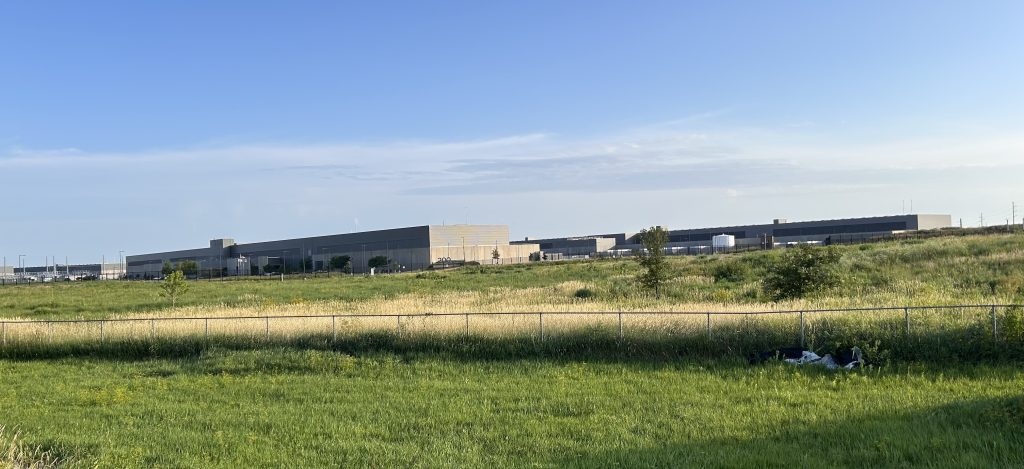
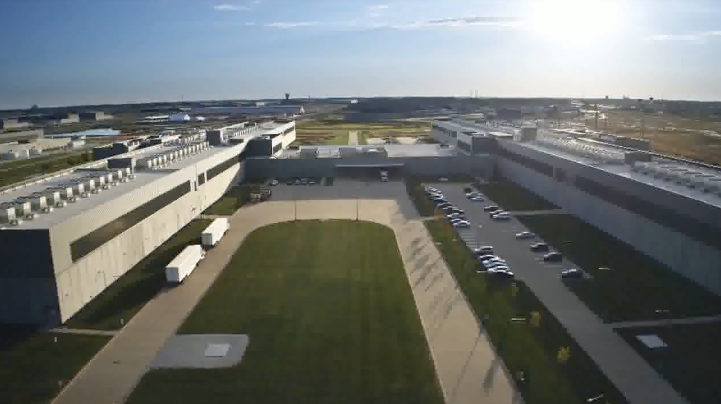
Since last fall, when Meta ran a TV ad extolling its data center in Altoona, visitors from South Carolina and Texas to Michigan and Minnesota have called, visited, or Zoomed in to learn more about Meta’s 5.5 million square feet of warehouse-like buildings that sprawl along Interstate 80 on the north edge of town. (Watch the ad here)
If there’s anything misleading about the ads, it’s the impression they give of a small town surrounded by farm fields. Instead, Altoona is a rapidly growing Des Moines suburb that draws thousands to its Adventureland amusement park and outlet malls.

Looking fit and trim— about a week after a round of chemotherapy for stomach cancer—O’Connor recently sat in a city hall conference room to answer more questions, this time from a reporter.
“They’ve come down to see it and to see that there’s no noise, there’s no light, no pollution, and then they discuss water,” O’Connor said of his visitors. “So everything that you’re hearing in the national news that’s bad about data centers is not happening in Altoona. Now, do they use water and power? Yes. Anybody that had 5.5 million square feet in Altoona and is in some sort of industry, would use power and water.”
Meta’s cost to the city is far less than providing water, public safety, and plowing snow for a residential subdivision the size of Meta’s 600-acre property, he said.
O’Connor adds that he speaks only for his experience with Meta. He doesn’t consider himself an expert on all data centers.
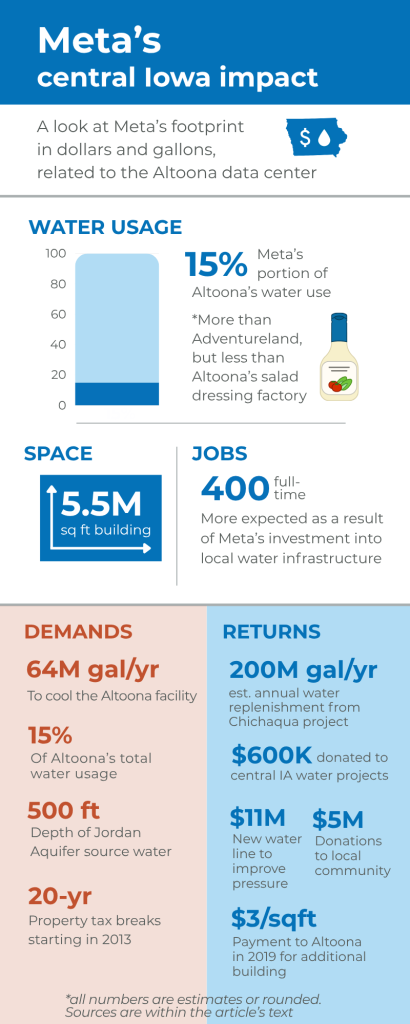
Meta’s water used for cooling banks of computers, or servers, ranks behind the annual water use of an Altoona salad dressing factory and just ahead of Adventureland with its water park. On a hot summer day, Meta might use as much as 300,000 gallons, O’Connor said. Its annual water withdrawal was 64 million gallons in 2024, as reported in Meta’s Environmental Data Index.
Meta (formerly Facebook) started building its Altoona data center 13 years ago, long before public resistance to rapid expansion of data centers needed for Artificial Intelligence. Data needs have reportedly contributed to rising electric bills on the East Coast, potential strains on water supply in the arid West, and loss of bits of farmland in the Midwest. In Beaver Dam, Wisconsin, Meta’s 10-year agreement with Alliant Energy for electricity for a new data center drew criticism from consumer advocates, even though Meta representatives say consumers will not bear additional costs.
Here in Iowa, Madison County is one of several local governments placing a moratorium on new data centers. Both candidates for Iowa governor are weighing in. Republican Zach Lahn favors a statewide moratorium. Democrat, Rob Sand, is skeptical of benefits for small towns and opposes tax breaks for data centers.
This article looks at data centers and their relationship to water, not energy. But the two are related. As electrons move through resistant metal on an electric stovetop, they generate heat. Something similar happens when they move through microscopic pathways in a computer chip. Data centers with thousands of computers generate a lot of heat. Water is commonly used for evaporative cooling.
Most companies with data centers in Iowa, including Meta, Google and Microsoft, are working to improve their cooling efficiency and have goals of a neutral, or even positive, impact on water supplies in a few years.
Yet, data centers pose at least small risks to Iowa’s water supply along with benefits, both economic and environmental.
Both the risks and benefits are described below in two sections.
The risks
Data center water use is underestimated.
“A majority of the water use happens offsite, not onsite,”
said Lu Liu, Iowa State University assistant professor in water resources engineering. That’s mainly from water required to cool steam that drives turbines for electricity generation supplying data centers.
One national study projects that U.S. electricity generation will account for more than 70% of the water needs of data centers by 2030.

With a grad student, Liu is researching off-site use of water in Iowa. The off-site water impact varies drastically, depending on the local power grid. Because Iowa gets 60% of its electricity from wind turbines (which don’t require water), she doesn’t expect off-site water needs to be as high in Iowa. Iowa tops the U.S. in the share of electricity from wind energy.
Water use is growing. Dan Scott, Altoona’s utilities director, said the city gets about one inquiry a month from potential center builders. They’re drawn by ample space for building away from residential areas, a good location at a crossroads of major interstates, and cold winters that reduce the demand for water for cooling. “I’m fairly certain there will be more data centers coming to the city, just because of the interest there is in data centers,” Scott said. One data center developer has already bought land north of town.
Meta and other big users might take 15-20% of Altoona’s current supply “on a high usage day,” Scott said, which he feels is modest. Altoona is spending $50 million for new wells and water treatment that will double its supply, but “it’s not [because] of one user but the overall city growth.” He believes that data centers alone will not strain utilities.
In West Des Moines, where Microsoft has five data centers with another under construction, its water usage for 2024 was almost 67 million gallons, similar to Meta’s in Altoona. Because West Des Moines is larger, Microsoft’s share of total water output was 2.4% in 2025.
Still, in a 2023 Memorandum of Understanding between that western suburb and Microsoft, both parties noted that “The drought conditions of the past few years shined a rather bright light on the finite quantity of water, underscoring the importance of stewardship.” Microsoft has invested $25 million in a new water tower and a well to store treated water in winter and provide water for peak demand in summer.
“They’ve done all these things to offset any potential impact on our system,” said Christina Murphy, general manager of the West Des Moines Water Works.
Last year, West Des Moines joined Central Iowa Water Works (CIWW), which has 12 members serving 600,000 people. (Altoona is not a member.) In July of last year, when a lawn watering ban was in effect for 18 days, data center use comprised 0.9% of water from CIWW. “We’re talking about less than 1% even under our worst conditions,” Murphy said. In comparison, summer lawn watering (when it isn’t banned) accounts for 30-40% of use, according to Murphy.
Right now, the biggest impact of data centers in Iowa is urban, not rural, according to a tally of the 107 centers in Iowa by ISU expert Liu and a student. Nearly all are near Des Moines, Council Bluffs, Sioux City and other metro areas.
But data centers are eyeing rural Iowa. Not far from Cedar Rapids, the town of Palo has green-lighted a Google center near Iowa’s only nuclear power plant. The plant was shut down in 2020 after severe storm damage, but will likely come back online by 2029 to help power the data center with a clean energy source.
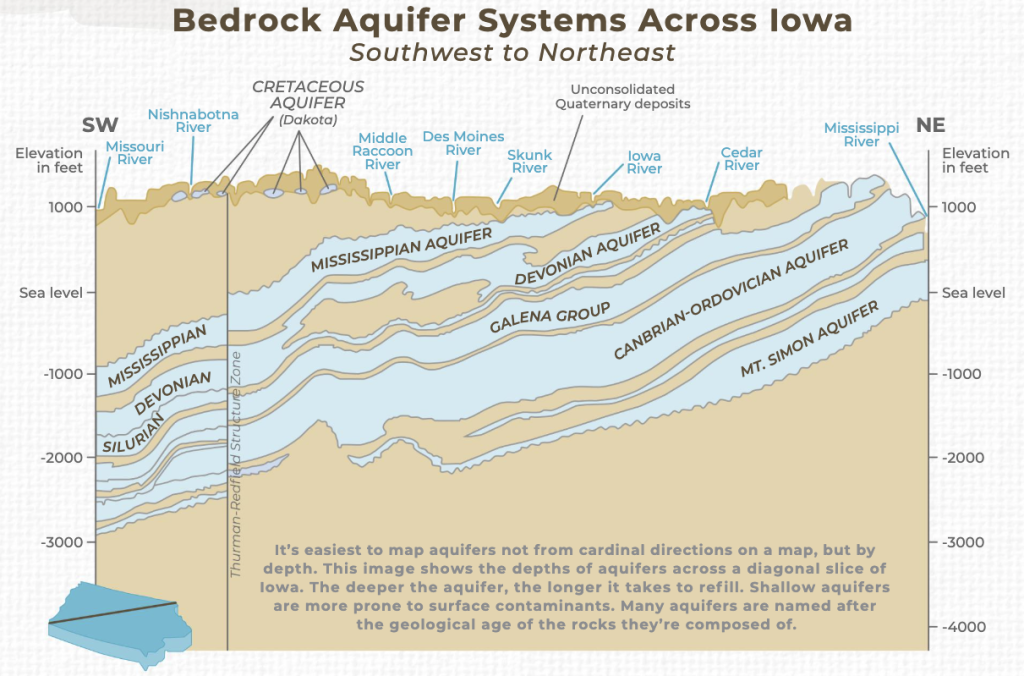
Iowa’s huge Jordan Aquifer is shrinking. Altoona, West Des Moines and some other suburbs get water from the Jordan Aquifer, which is far from running dry but is being drawn down. In Altoona, the water-rich layer of rock older than the dinosaurs is about half-a-mile below the surface and 500 feet thick.
“It’s an enormous aquifer beneath the entire state of Iowa,” utilities director Scott says. Altoona’s mayor, O’Connor, said that each time the city has drilled a new well, it has had to go deeper. “It’s great that we have access to this great aquifer, but we do have to be judicious about it,” O’Connor said. Added Scott, “When a large water user comes to town, they’re very well vetted. We know how much water they’re going to be using.”
The state approves wells in the Jordan Aquifer and regulates their use.
Concern about Jordan drawdown isn’t new. Geologists have studied it for decades because it’s a non-renewable source of water. When it’s gone, it’s gone. Early this year, a report to the Iowa legislature by state geologist Keith Schilling highlighted drawdown in the Jordan and other aquifers and data center use of water.
“It’s not going to get recharged in our lifetime,” Schilling said in a recent interview with IAWA. Scientists have studied the age of the water in the Jordan by counting a natural isotope, Chlorine36, which has a half-life of 300,000 years. “At a minimum, it’s tens of thousands of years old, some say up to a million years old,” Schilling said.
Data centers aren’t tapping groundwater themselves. “They buy the water from cities,” he said. “The cities are the ones taking that load on. They’re balancing their water demand.”
Other water sources are more easily renewed.
Near Council Bluffs, Google is tapping shallow wells in the Missouri River floodplain.
“That’s as good as it gets. It’s constantly replenished and has big volume,” Schilling said.
The alluvium or shallow rock aquifers in eastern Iowa also suffice, but may be affected by drought. “As long as we get rainfall—we’re going to get recharge,” he says. Cedar Rapids water is 100% alluvial ground water next to the river.
Schilling said that society needs to figure out how to manage its water resources. In Iowa, for now, much of that responsibility falls to cities and towns.
The benefits
While data centers put more pressure on Iowa’s water resources they also are bringing economic and environmental benefits to the state.
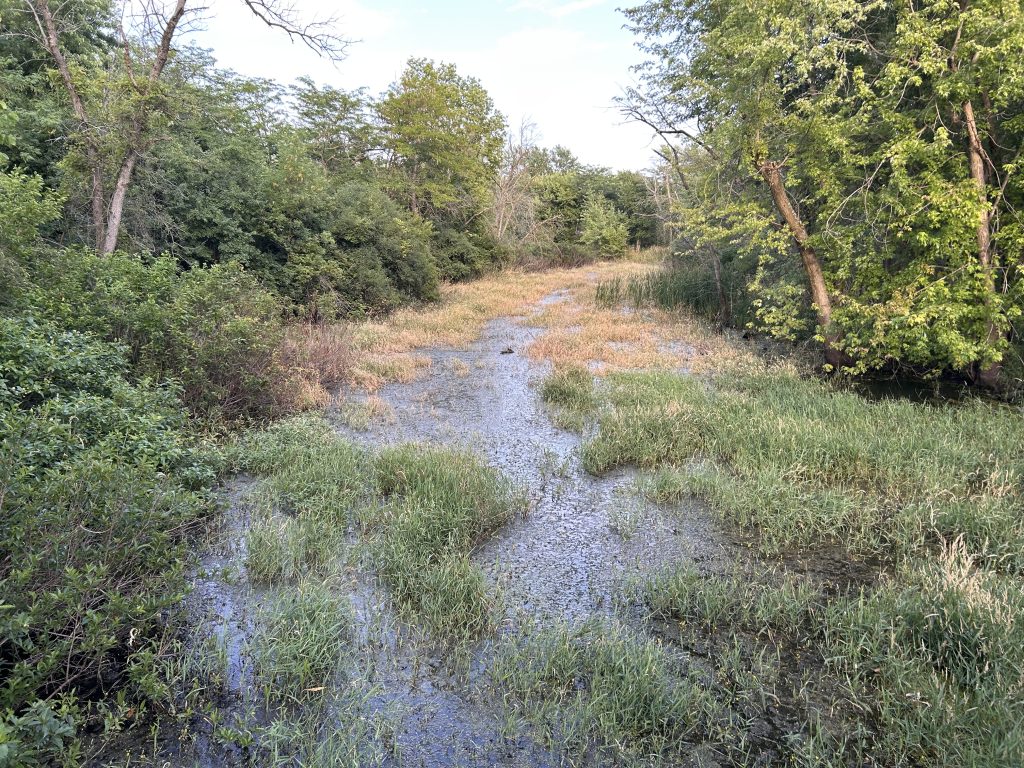
Replenishing and improving water quality. Last year, Google committed $1.3 million to pay for about a third of the cost of grade stabilization projects in western and southern Iowa. The state of Iowa picks up the rest of the tab.
The 47 structures are similar to farm ponds and have already been completed, said Melissa Campbell, senior project manager for the Great Outdoors Foundation (GOF), a Polk County-based nonprofit that organized the work.

“These permanently hold back water,” Campbell said. “Typically they help with erosion. There’s infiltration, depending on where they’re located.” None are on Google sites. “They are all on private property,” she said.
GOF estimates that the 47 grade stabilization structures will treat drainage from 3,829 acres and replenish 948 million gallons of water annually. They will also mitigate 1.2 million pounds of nitrate, a water quality issue unrelated to data center water use.
In West Des Moines, where Microsoft has already spent millions reducing its withdrawal of city water, the company also supports smaller community projects such as the Legacy Woods Nature Sanctuary. The city bought the 30-acre property near Jordan Creek in 2023. This year Microsoft is one of five donors who are contributing more than $1 million for prairie restoration and a stormwater wetland at Legacy Woods.
The gift is part of another Great Outdoors Foundation (GOF) initiative, the Conservation Acceleration Fund. “It’s going to be improving recreation as well as conservation. It will be a huge win for the community,” said Hannah Inman, CEO of the foundation.
Meta is the sole private contributor to another, large GOF project along the South Skunk River in the Chichaqua Bottoms Greenbelt about 10 miles north of Altoona. Pumps will fill a four-mile oxbow along the river, creating an innovative linear wetland. Meta is contributing $240,000 of the $1 million structure, with remaining support from the state and Polk County. When completed later this year, it will replenish more than 200 million gallons of water per year—more than what Meta now uses in Altoona—and capture tens of thousands of pounds of nitrogen annually from nearly 10,000 acres of agricultural drainage, according to the foundation.
Meta is the sole private contributor to another, large GOF project along the South Skunk River in the Chichaqua Bottoms Greenbelt about 10 miles north of Altoona. Pumps will fill a four-mile oxbow along the river, creating an innovative linear wetland. Oxbows naturally remove nitrate and provide habitat for the Topeka Shiner.
Meta is contributing $240,000 of the $1 million structure, with remaining support from the state and Polk County. When completed later this year, it will replenish more than 200 million gallons of water per year—more than what Meta now uses in Altoona—and capture tens of thousands of pounds of nitrogen annually from nearly 10,000 acres of agricultural drainage, according to the foundation.
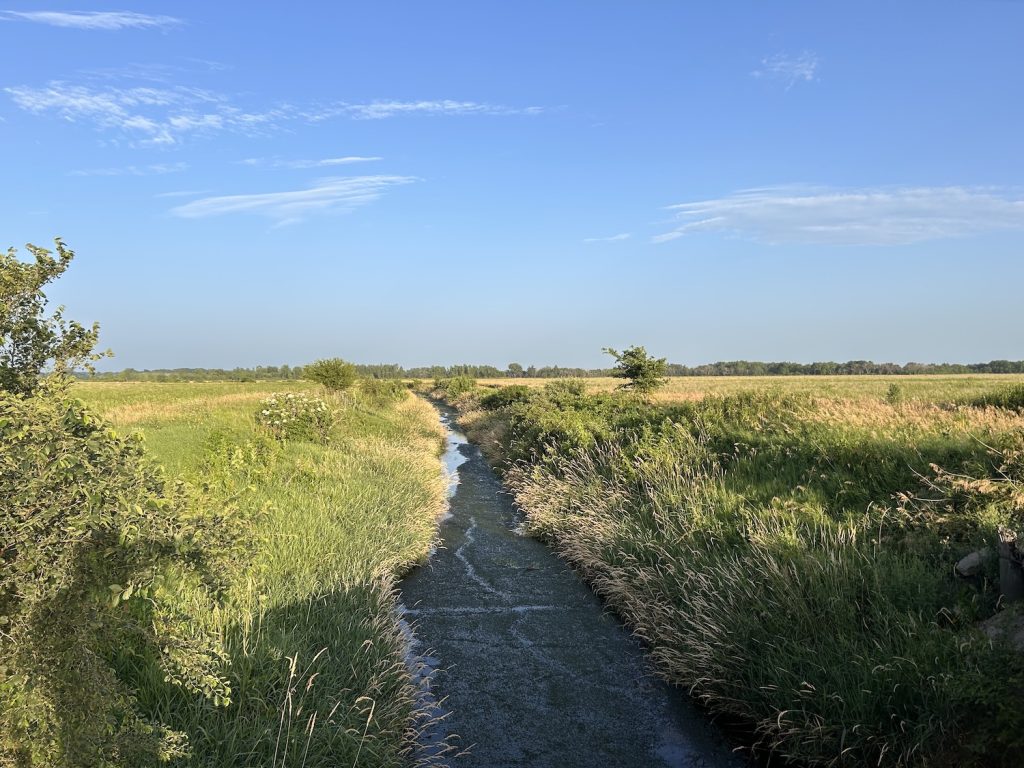
Over the past 5 years, Meta has contributed about $600,000 to several central Iowa water projects, said Matt Sexton, community development regional manager for Meta.
The South Skunk River sits about 2,500 feet above the Jordan Aquifer that supplies Altoona’s water, so the project isn’t a direct replacement even with those improvements to water quality. Yet, it’s just one part Meta’s global efforts to restore 200% of water consumed in high water stress regions and 100% in medium water stress regions.
In 2024, all of Meta’s data centers in the U.S and Europe had water withdrawals of about 1 billion gallons, according to a 2024 report from its outside consulting firm, LimnoTech. Its “volumetric benefits” that year, mostly in the western states, reached 1.5 million gallons. When all of its projects are completed, the company expects more than 3 billion gallons of benefits. The nearest existing project is for drip irrigation in the Platte Valley near its Papillion data center south of Omaha.
Back in Altoona, Sexton and other Meta representatives said the company already cycles water through its plants multiple times and is seeking more efficient cooling.
One example, Sexton said, is that “the way our servers work in Altoona and anywhere else is to strip out any superfluous parts, any plastic…and make the airflow as efficient as possible.” Meta shares such innovations with some 400 competitors, including Google and Microsoft, through a nonprofit it founded, the Open Compute Project.
Economic growth and jobs. A common complaint about data centers is that once they’re built, they have few employees. Meta’s Altoona data center has 400 full-time employees, according to Sexton. That might seem small for a city of 24,000. But Meta has also given $5 million in donations to the community.
Mayor O’Connor said benefits have multiplied due to Meta’s presence. When the city recruited the data center in 2013, it gave a 20-year property tax break under pressure from Governor Terry Branstad, he said. But when Meta expanded on its Altoona site with a fifth data center building in 2019, the city negotiated a $3 per square foot payment in lieu of property taxes.
Meta has also spent $11 million for a new water tower and sewer line. Better water pressure has helped draw other businesses to “everything that’s built out up north of the interstate, all of those businesses, all of those warehouses, all of the logistics,” O’Connor said. “We just landed Robinson, Inc. out of Wisconsin. They’re a metal manufacturer. They actually work with data centers. Go figure. It’s starting off to be 100 to 300 jobs. It could be up to 800 jobs.”
Another neighbor of Meta is the Baker Group, which manufactures and ships components for data centers.
And Meta itself is a valuable business for Altoona, O’Connor said.
“You forget how much communities use social media to promote what’s going on,” he said. “Any event that happens in Altoona – parades, farmers’ markets, celebrations in Old Town – that’s all promoted out on Meta (Instagram and Facebook), and these social media sites. I own a business, we promote ourselves on Instagram, and all these small businesses do.”
“These people that don’t want a data center, don’t realize that their phone in their pocket runs through data centers,” he added. “I don’t understand their thinking.”