The Nitrogen Cycle
How the cycle works in Iowa’s cropping system
An overview of the nitrogen cycle
WATCH: How the nitrogen cycle impacts Iowa’s cropping system
Breaking down the steps
Since it’s called the nitrogen “cycle,” you might think it moves in a perfect circle, but it’s more complicated than that! These steps can happen out of order and at different times and are often impacted by environmental factors.
Fixation
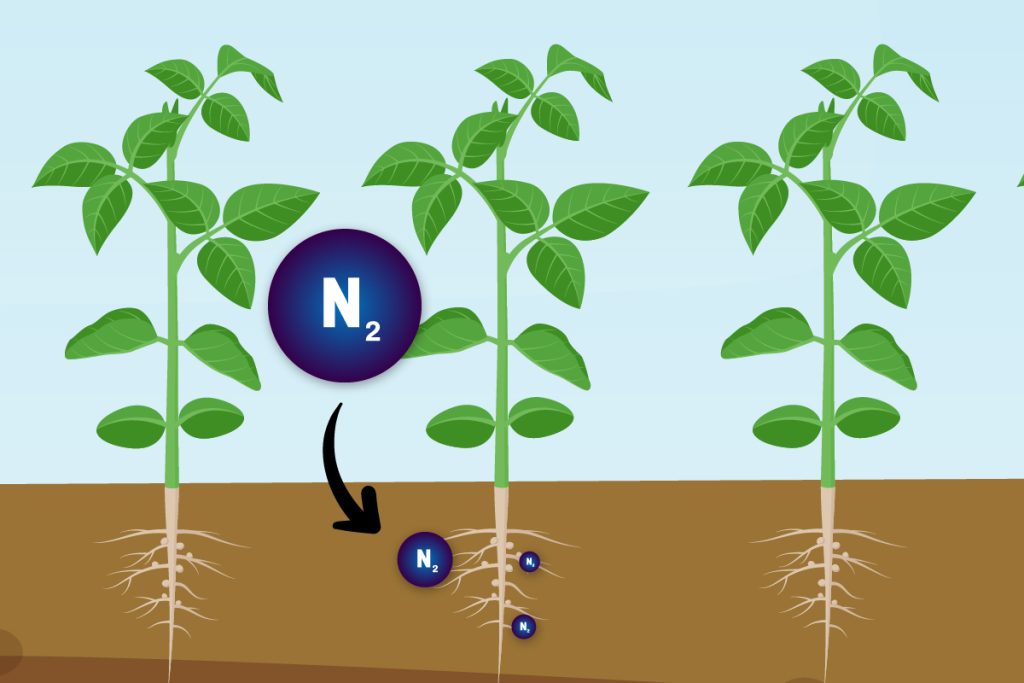
Some plants, like legumes, can “fix” nitrogen from the air. They pull atmospheric nitrogen (N2) from the air and turn it into ammonia (NH3). Fixation is how Iowa ended up with a bank of 10,000 lbs of naturally occuring nitrogen in the soil per acre! This is also the step used when making synthetic fertilizers.
Ammonification
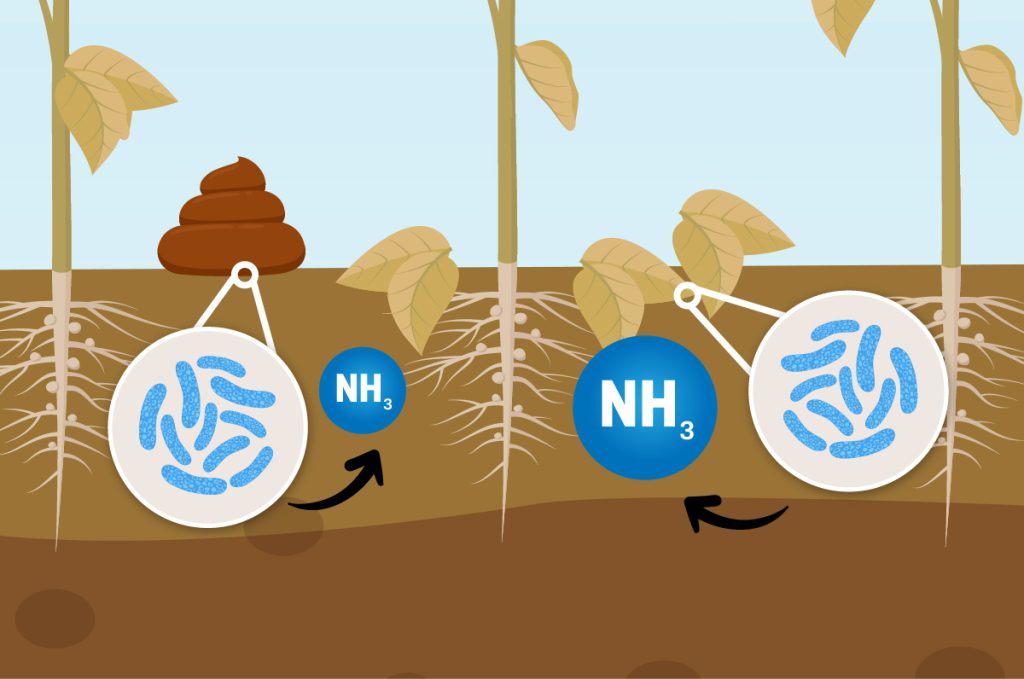
This happens when plants or animals die or release waste. Living organisms in the soil decompose the matter into ammonia or ammonium. This is why living soil is so important. Want to see if your soil is alive? Try burying your undies! (Really, we’re actually serious. This video explains!)
Nitrification
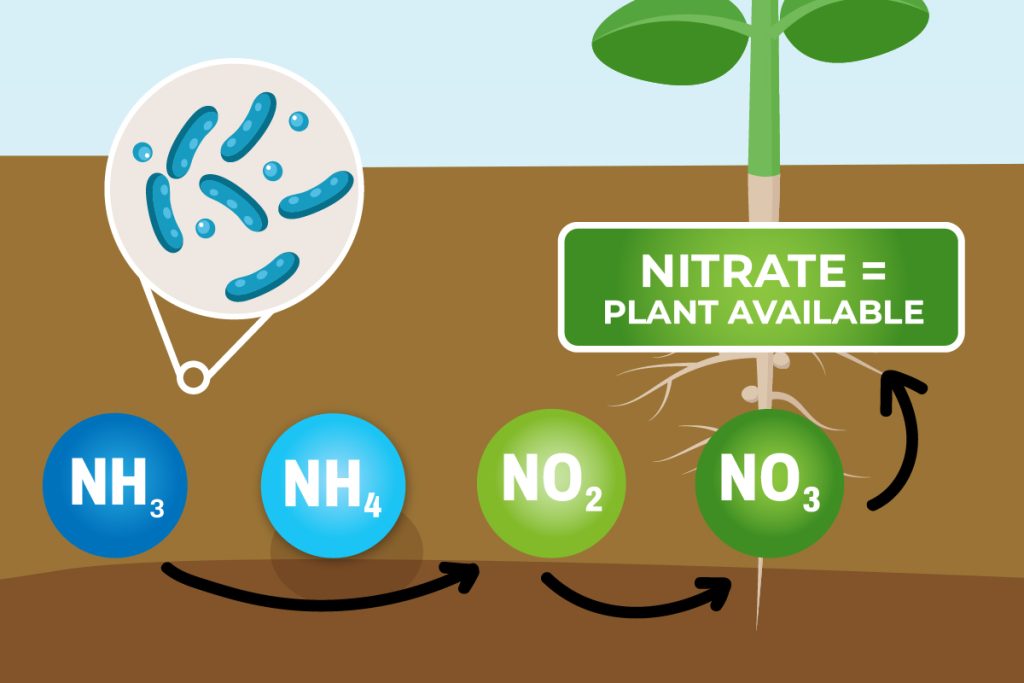
This is the most important step to make sure plants have enough nitrogen to grow. Soil bacteria convert nitrogen into nitrate. Nitrate is the most plant-available form of nitrogen. It’s also water-soluble, meaning it moves with water.
Assimilation
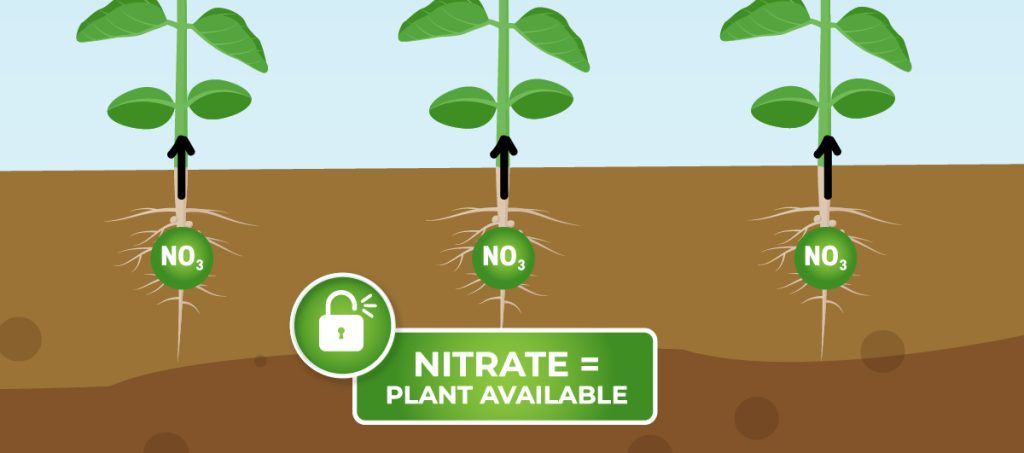
Plants absorb nitrates from the soil to form plant proteins. Nitrogen makes up part of the chlorophyll in plants (the green part of leaves and stems). It helps regulate plant growth and development. Nitrogen also helps the plant produce grain.
Denitrification
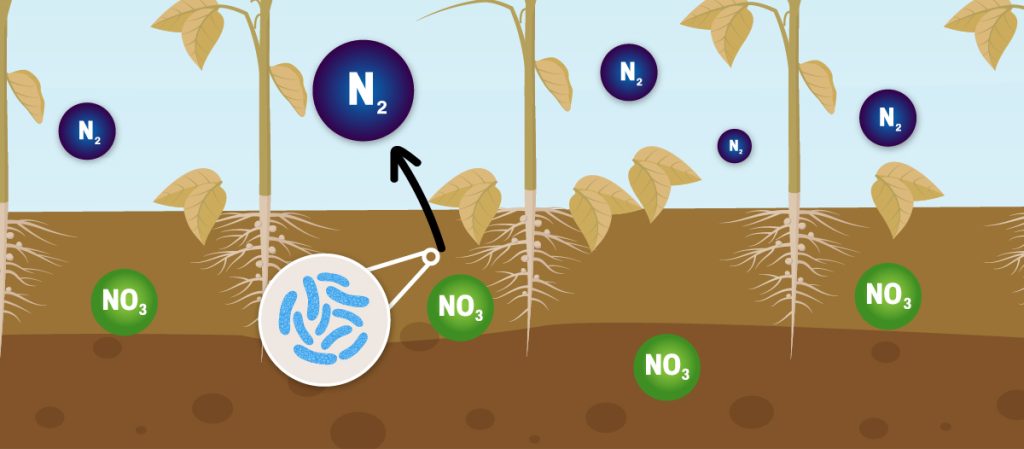
Denitrification is actually a form of respiration. Some bacteria can get the oxygen they need from the oxygen portion of nitrate and nitrite. When they “breathe” in nitrate, they release N2 back to the atmosphere. The best condition for this is wet soil because it creates a low-oxygen atmosphere.
How the nitrogen cycle fits into the Iowa cropping system
The graphic below can help you understand how nitrogen moves within a corn growing season. We’ve added numbered steps to help you read it, but remember, the nitrogen cycle doesn’t always move in a perfect circle. For example, there are literally billions of combinations that change how much nitrogen is used by a corn plant each year, from rain to sunshine, soil type to hill slope, and more. This is a key area of agriculture research.
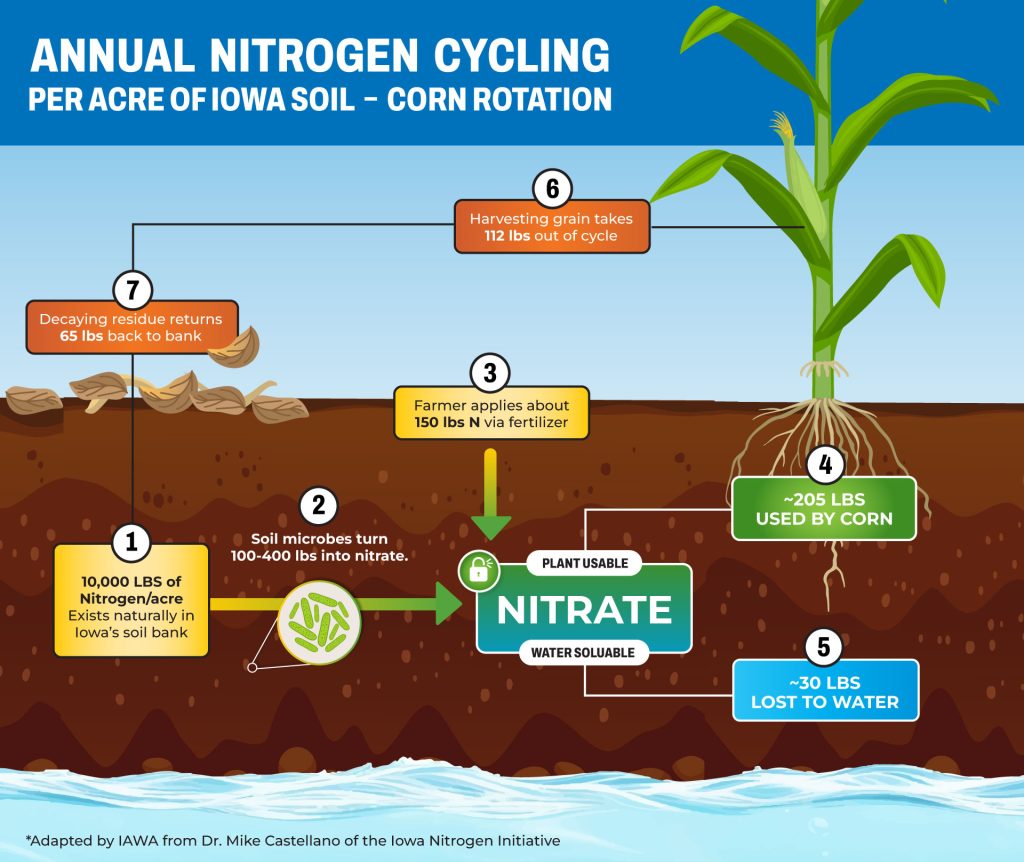
How Iowa’s seasons & soils impact nitrogen movement
Iowa has fertile soils that are perfect for growing crops. Iowa also faces some nitrogen challenges because of how meteorological seasons interact with our growing seasons and our natural environment. There are two key concepts to understand:
- Plants can get nitrogen from both natural sources in the soil and applied nitrogen. Iowa stores about 10,000 lbs of naturally occuring nitrogen in the soil per acre. This bank was built up over millenia.
- The most plant-available form of nitrogen is nitrate – it’s water-soluble making it easy for the plant to use it, and for it to move with water.
March-April
What’s happening in March through April in…
🌎 The environment: Meteorological spring begins on March 1st. Soils begin to warm up, spring rains move in, and microbial activity starts to pick up. Most Iowa farm ground is bare. This combination makes nitrate extremely vulnerable to movement. Farmers are waiting for soil temps to be around 50 degrees with warming trends in sight.
🚜 The farm: Some farmers apply spring nitrogen on their fields to prepare the ground for planting. For water quality, spring nitrogen is preferred over fall because it’s closer to when the plant needs the nutrients, meaning there are fewer days where the nitrogen could be lost. However, spring can be a challenge due to wet soil conditions and heavy equipment.
🌱 The nitrogen cycle: Soil organisms are helping to break down residue from the last growing season (ammonification) and starting to produce more nitrate (nitrification). Hopefully, most of this nitrate sticks around for the incoming crop, but if it rains and the ground is bare, nitrate can flow downstream. If a farmer planted a winter-hardy cover crop, the plant is coming out of its winter dormant stage. Legume cover crops can fix nitrogen from the environment (fixation).
april-May
What’s happening in April through May in…
🌎 The environment: Soils warm significantly, and more spring rain comes. Microbial activity in the soil is high and spring rains make nitrate especially vulnerable until crops start to take root.
🚜 The farm: If a farmer planted over-wintering cover crops, they’ll terminate them before or after planting. These two months are critical for planting corn and soybeans once soil temps reach about 50 degrees and warming.
🌱 The nitrogen cycle: Microbes are busy transforming organic matter into nitrate that plants can use (nitrification). Without roots in the ground, the production is often too early for crops to use it, and it can be lost downstream to rain. For farmers who terminated cover crops, the decaying plant matter is being broken down (ammonification) so it can eventually be used by the farmer’s main crop.
june-Aug
What’s happening in June through Aug in…
🌎 The environment: Summer officially arrives June 1. June-Aug are hot and increasingly humid. Summer rains hopefully provide water for crops, but can be risk factors for soil and nitrogen loss.
🚜 The farm: In June, some farmers apply mid-season nitrogen (N) in a process called “sidedressing”. This is an excellent, environmentally friendly way to get nitrogen to crops exactly when they need it. Corn uses 205 lbs of N per acre, but less than 20% of corn N uptake occurs before V6 (when corn has 6 leaves, usually around mid-late June).
🌱 The nitrogen cycle: Crops are taking in nitrate to use for growth (assimilation). Corn needs supplemental nitrogen, but soybeans are able to fix nitrogen from the environment (fixation), some of which is stored in the ground. Meanwhile, microbial activity is continuing to produce more nitrate (nitrification), which is vulnerable to downstream loss until at least mid June. That’s when crop canopies slow the intensity of rain, corn needs the most nitrogen, and crop roots are more developed.
Sept-Oct
What’s happening in Sept through Oct in…
🌎 The environment: In October, soil temperatures start decreasing, but not enough to stop soil microbial activity. By the end of Oct, soil temps are usually 50 degrees trending lower.
🚜 The farm: Farmers harvest corn and soybeans in September and October. For farmers without cover crops, this leaves soils bare. Cover crops can be interseeded into the current crop starting in Aug, or planted after harvest. The earlier the better so that the plant can get a good start before winter puts them into dormancy.
🌱 The nitrogen cycle: Because nitrogen is found in the plant’s yield, farmers remove some nitrogen from the system when they haul away their harvest. After harvest, what’s left of the crop can start decomposing (ammonification). Because soils are still warm, some nitrification is still happening. Any nitrate in the soil is once again vulnerable because of no living plants in the ground (unless cover crops are present).
Oct-Nov
What’s happening in Oct through Nov in…
🌎 The environment: As fall arrives, soil temperatures drop, but not enough to completely shut down microbial activity. Fall can be rainy, but it is typically a drier season in Iowa.
🚜 The farm: After harvest, some farmers will plant fall cover crops. Some farmers start applying fall nitrogen in the form of manure or fertilizer in November. Why fall? It spreads workload out and away from the intense spring busy season, and it locks in fertilizer prices.
🌱 The nitrogen cycle: If nitrogen is applied before soils are 50 degrees and falling, microbial activity turns much of the nitrogen into nitrate (nitrification), and it’s vulnerable to move with water, especially when soils are bare. A nitrogen inhibitor can be added to help stabilize the nitrogen until it’s needed next spring. Crop residue also starts decomposing (ammonification) but most decomposition happens in the spring and early summer. If a farmer planted a winter-hardy cover crop, those plants start fixing nitrogen (fixation) and consuming it (assimilation) for fall growth before the plant goes dormant for winter.
Dec-Feb
What’s happening in Dec through Feb in…
🌎 The environment: After soil temperatures drop, microbial activity slows greatly. Winter blizzards can be a risk for windblown erosion, and snow melt is a risk factor for erosion and nutrient loss.
🚜 The farm: Farmers plan for the next growing season. Farmers do not apply commercial fertilizer or liquid manure in the winter because frozen ground prevents the soil from absorbing nutrients.
🌱 The nitrogen cycle: During cold winters, nitrogen remains stored in the soil’s natural bank (after assimilation). Nitrate doesn’t tend to move as much because the ground is frozen preventing water from sinking deep into the soil, and surface runoff is lower. Microbes also don’t produce as much nitrate (nitrification) because they are less active in cold weather. However, in recent years, warm winters have led to persistent nitrate loss problems in Iowa.
Why do farmers apply fertilizer if it’s naturally found in the soil?
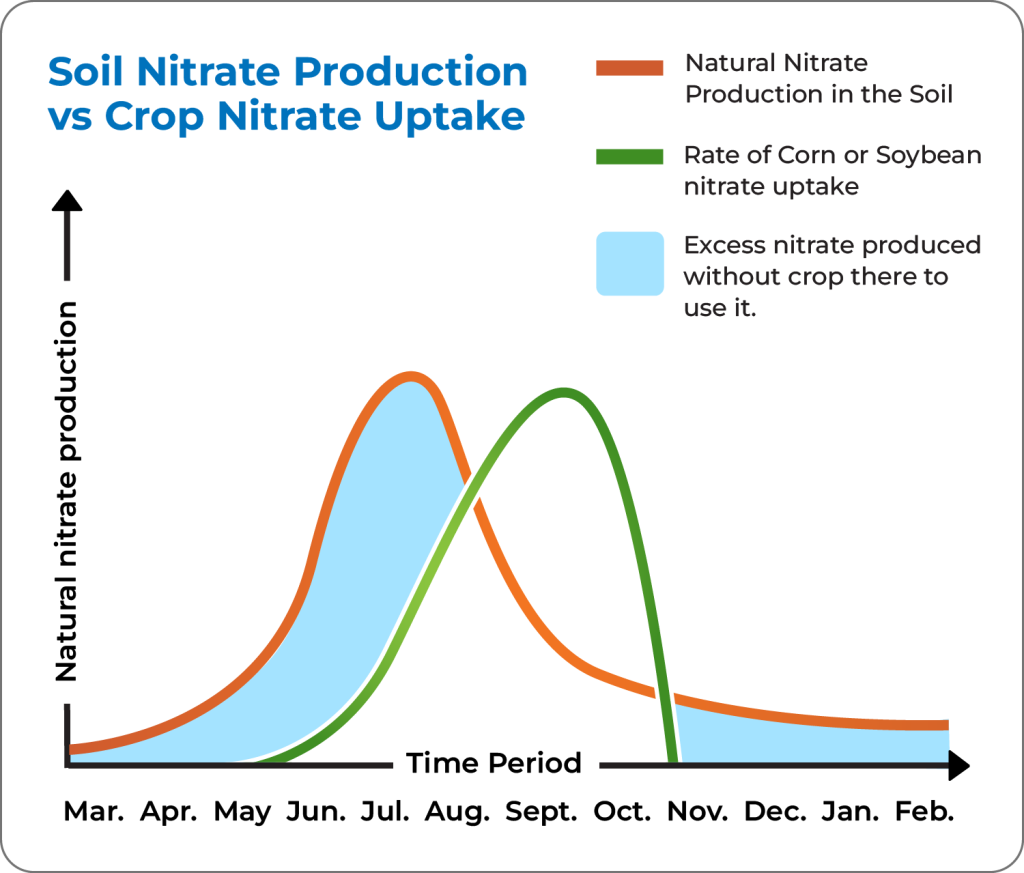
- Nitrogen balance: Farmers have to replenish what they remove in harvest. If they do not, they are unsustainably mining Iowa’s soils, one of our most important natural resources.
- Timing: Much of the naturally occurring nitrate is produced at the wrong time. (See the related graph) Because of Iowa’s weather, microbes end up producing nitrate about a month before the growing season.
- Variables: The amount of naturally produced nitrate is different every year; it’s highly dependent on temperature, precipitation, soil health, and more, and can be hard to predict. The Iowa Nitrogen Initiative is trying to help with this.
- Loss: Some nitrate is lost to water, unfortunately. What makes nitrate plant available, also makes it vulnerable to water. With conservation, we are trying to prevent this, which also helps farmers save money on less fertilizer.
How we can use the cycle to our benefit
All on-farm conservation practices are a way to better utilize the nitrogen cycle. We can delay the natural production of nitrate, divert nitrate from moving, and use the denitrification part of the cycle to remove it from nitrate form.
Cover crops
Cover crops hold nitrogen until a farmer terminates it so it can be released for the main crop. Legume cover crops like clover or hairy vetch are also nitrogen fixing, so they can pull nitrogen from the air. Learn more.
Soil Health
Building organic matter through reduced tillage and cover crops makes the biology of the soil stronger, meaning more efficient conversion of nitrogen to plant available forms. With better soil biology, farmers can apply less fertilizer. Learn more.
drainage
Saturated buffers and bioreactors direct tile water into carbon rich soils and woodchips where microbes can denitrify the water. Learn more.
wetlands
Wetlands are natural nitrogen sponges, using plants and saturated soils to denitrify water after it leaves the field. Learn more.
prairie
Dense root systems can stop nitrogen from moving through the soil profile and build diverse microbial communities. Learn more.