
Ross Kurash’s Recipe for Conservation Success: Recognition + Education + Implementation
By Micaela Cashman
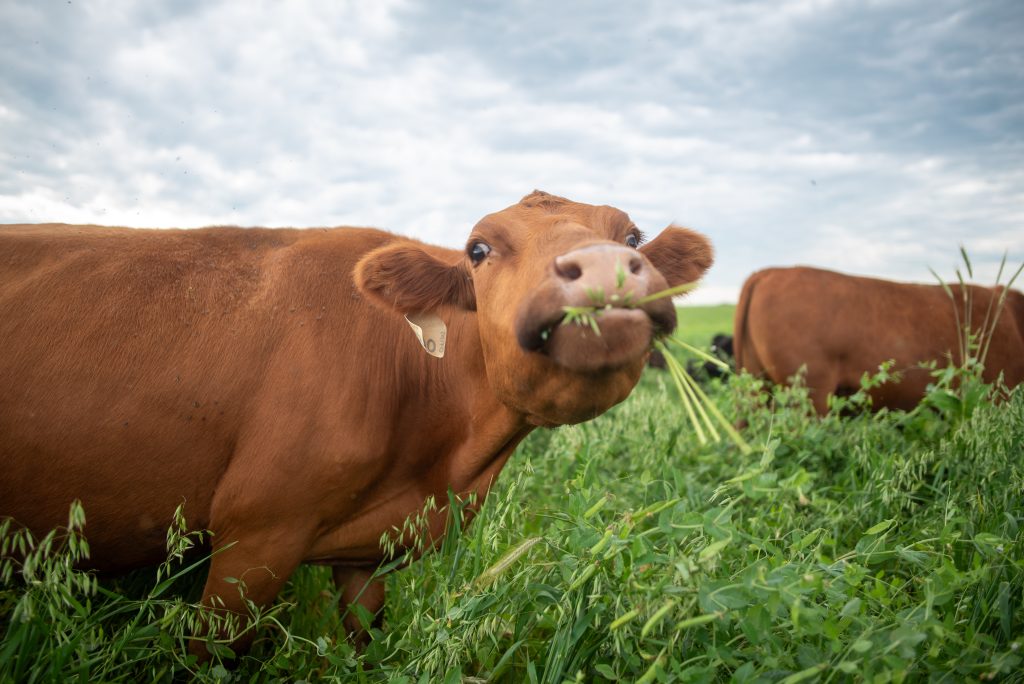
Ross Kurash and his wife, Cassie, farm in northeast Iowa on the border of the Paleozoic Plateau, also known as the “Driftless Region.” This region is very different from the rest of the state, with steep bluffs, dense woodland, and rugged topography.
During the Paleozoic age, this land escaped the last several glacial periods, so bedrock is still standing strong. That means farmers are dealing with limited topsoil, and preventing erosion is crucial.
Kurash, a fifth-generation farmer and full-time John Deere customer quality liaison engineer, knows this soil well. He grew up helping out on the land he now owns, and when he took over farm operations in 2019, he was prepared to keep his farming practices status quo — that is, until he started noticing how bad the erosion was getting.
“If you really observe springtimes, heavy rainfall periods, you could see ruts of erosion,” Kurash said. “You’re losing that volume of topsoil and all your expensive inputs. I had just made my biggest investment ever, and I was not okay with watching it wash away.”
What he was losing economically was just part of the problem, he said. He also realized that his field’s degradation was creating problems down the line.
“Once I was no longer ignorant of how I was participating in surface and groundwater pollution, realizing I was not thinking for myself, I decided I constantly need to get better at how I’m treating my ecosystem.”
Kurash decided to dip his toes into conservation by no-tilling beans into corn stalks. After completing Understanding Ag’s soil health course, he realized no-till was a small piece of a greater soil health picture.
“That’s what we’re truly after,” Kurash said. “If we have healthy soil, the rest of the ecosystem falls in line.”
At the beginning of Kurash’s conservation journey, he found it difficult to get measurable soil health improvement quickly with just corn, soybeans, and hay. So he introduced more diversity with cover crops. The EQIP program and Practical Farmers of Iowa cost-share programs helped Kurash get started.
“It took a full season of cover crops with lots of diversity to truly start seeing change in soil,” he said.
Fast-forward a few years, and Kurash now does diverse crop rotations (including a small grain rotation), year-round cover crops, no-till, and rotational grazing for his herd of beef cattle. He seeds forage crops twice in the summer — once in June after the cows have grazed and again following rye harvest in July.
Kurash said these practices have virtually eliminated erosion, and while his soil isn’t perfect chocolate cake everywhere, it’s getting closer. As he walks through his fields, he sees darker soil with more aggregation and higher infiltration rates.
“I can walk without sinking in, and I barely have any mud on my boots after several inches of rain,” he said.
Kurash is still refining a complete farming system of conservation that works with his unique northeast Iowa land. While he admits that there are plenty of nuances to his land, he doesn’t buy into the belief that certain conservation practices won’t work based on your farming region.
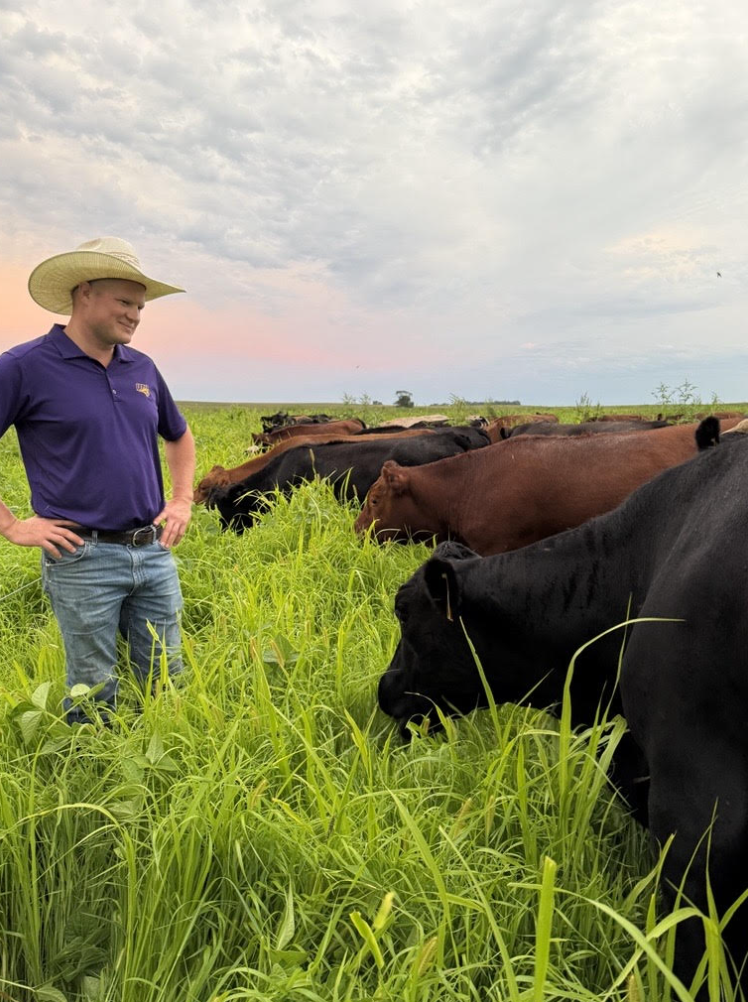
“In my opinion, that’s ignorance and the wrong level of thinking,” he said. “You need to get to a higher systems level of thought. These principles work everywhere. The how is a little different.”
To figure out the how, Kurash relies on the experts. The agronomists at his local seed sales companies give him recommendations and specific seed mixes.
“They’re pulling from experiences that are way more vast than mine,” he said.
Kurash plans to continue relying on their expertise and he seeks to lower his inputs and find the perfect balance between applying fertilizer and allowing natural processes to happen within the soil. He hopes to continue building a healthy farm business that he can pass on to someone who shares his values and goals.
“I’m just a regular old farm kid who grew up doing what is very common,” he said. “Now, I have this totally integrated system of diverse crops and cattle that cares for my ecosystem.”